


2025-05-27T16:10:28
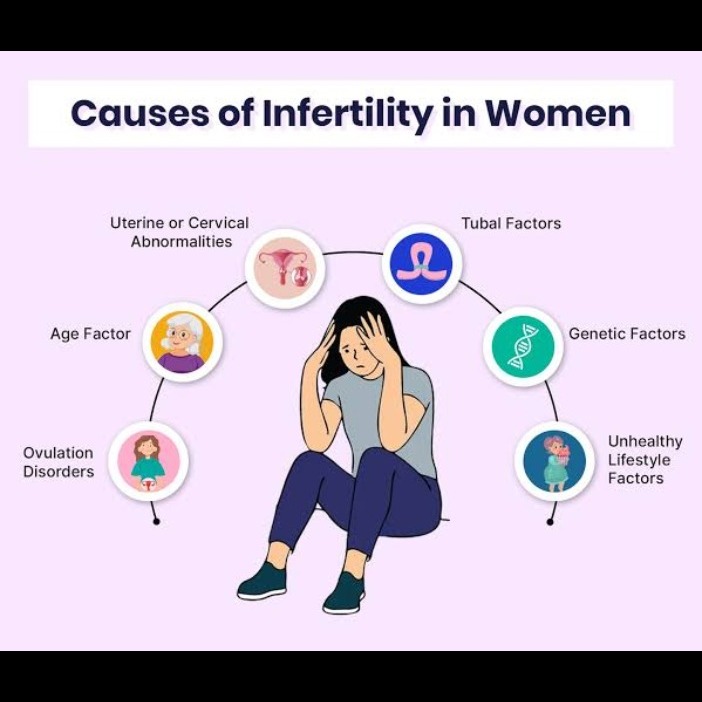
Common Causes of Female Fertility Problems 1. Ovulation Disorders One of the most common causes of infertility in women. If you don’t ovulate regularly, it's difficult to conceive naturally. Conditions linked to ovulation issues: ➤ Polycystic Ovary Syndrome (PCOS) ➤ Hormonal imbalances (thyroid, prolactin) ➤ Premature ovarian failure 2. Blocked or Damaged Fallopian Tubes Fallopian tubes must be open and functional for the egg to meet the sperm. Blockages or scarring can prevent fertilization. Causes: ➤ Pelvic inflammatory disease (PID) ➤ Endometriosis ➤ Previous pelvic surgeries 3. Endometriosis Endometriosis occurs when tissue similar to the uterine lining grows outside the uterus. It can affect the ovaries, fallopian tubes, and egg quality. 4. Age-Related Fertility Decline Female fertility begins to decline after age 35. Egg quality and quantity drop, reducing the chances of natural conception. 5. Uterine Conditions Fibroids, polyps, and congenital abnormalities can prevent embryo implantation or increase miscarriage risk. 6. Unexplained Infertility Sometimes, despite all tests being normal, pregnancy doesn’t happen. This is called unexplained infertility and affects many women. IVF Treatments for Female Infertility IVF (In-Vitro Fertilization) is one of the most effective fertility treatments for women facing these issues. It involves fertilizing an egg with sperm in a lab and placing the embryo into the uterus. Here’s how IVF helps treat specific female fertility problems: 1. Ovulation Issues & IVF For women with irregular or no ovulation, IVF uses fertility medications to stimulate egg production and ensure mature eggs are retrieved. 2. Blocked Fallopian Tubes Since IVF fertilizes eggs outside the body, it completely bypasses the fallopian tubes, making it ideal for tubal damage or blockage. 3. Endometriosis & IVF Even with endometriosis, IVF can help by retrieving eggs directly and optimizing embryo implantation with medical support. 4. Low Ovarian Reserve Women with fewer eggs can benefit from IVF, especially with techniques like: ➤ Embryo freezing (if cycles need to be repeated) ➤ Donor eggs (for very low egg count or quality) 5. Uterine Issues Uterine evaluation is part of the IVF process. If problems are found, they can often be treated before embryo transfer to increase success rates. 6. Advanced Maternal Age For women over 35, IVF combined with preimplantation genetic testing (PGT) ensures only healthy embryos are transferred, increasing pregnancy chances.