


2025-05-31T11:47:28
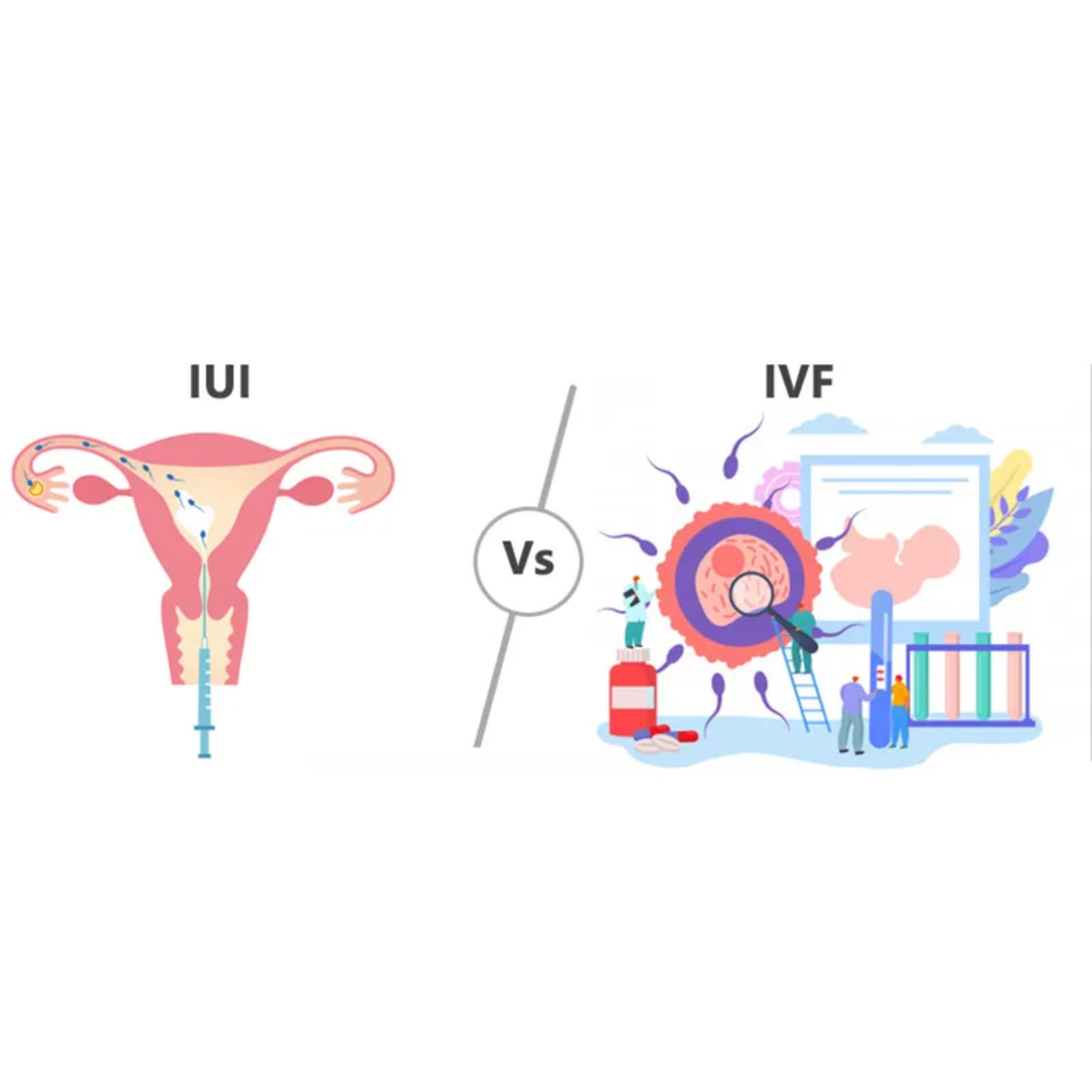
Intrauterine Insemination (IUI) vs. In Vitro Fertilization (IVF): Which Fertility Treatment Is Right for You? When couples face difficulty conceiving naturally, modern fertility treatments offer hope. Two of the most common and effective options are Intrauterine Insemination (IUI) and In Vitro Fertilization (IVF). Though both help individuals achieve pregnancy, they differ in procedures, costs, success rates, and ideal candidates. This article will help you understand the key differences between IUI and IVF so you can make an informed decision on your fertility journey. What Is Intrauterine Insemination (IUI)? Intrauterine Insemination (IUI) is a less invasive fertility treatment where sperm is directly inserted into a woman’s uterus during ovulation. The goal is to increase the number of healthy sperm that reach the fallopian tubes and subsequently boost the chances of fertilization. Key Steps in the IUI Process: ✔ Ovulation Tracking: The timing of the procedure is critical. ✔ Ovulation is monitored using urine tests or ultrasound. ✔ Semen Preparation: The sperm sample is 'washed' to concentrate the healthiest sperm. Insemination: A thin catheter is used to insert sperm directly into the uterus. Ideal Candidates for IUI: Mild male infertility ✔ Unexplained infertility ✔ Cervical factor infertility ✔ Same-sex couples or single women using donor sperm What Is In Vitro Fertilization (IVF)? In Vitro Fertilization (IVF) is a more complex fertility treatment that involves retrieving eggs and sperm, fertilizing the eggs in a lab, and then transferring the resulting embryo(s) into the uterus. Key Steps in the IVF Process: ✔ Ovarian Stimulation: Fertility drugs are used to produce multiple eggs. ✔ Egg Retrieval: Eggs are collected from the ovaries through a minor surgical procedure. ✔ Fertilization: Sperm is added to the eggs in a lab setting. ✔ Embryo Transfer: One or more embryos are placed into the uterus. Ideal Candidates for IVF: ✔ Blocked or damaged fallopian tubes ✔ Severe male infertility ✔ Endometriosis ✔ Older women or those with diminished ovarian reserve Couples who failed to conceive with IUI Pros and Cons of IUI Pros: ✔ Less invasive and painful ✔ Lower cost per cycle ✔ Minimal medication required ✔ Simple, in-office procedure Cons: ✔ Lower success rates ✔ Often requires multiple cycles Not effective for certain infertility diagnoses Pros and Cons of IVF Pros: ✔ Higher success rates ✔ Suitable for a wider range of infertility issues ✔ Can test embryos for genetic conditions ✔ Option to freeze unused embryos for future use Cons: ✔ Expensive and time-consuming ✔ Physically and emotionally demanding ✔ Risk of ovarian hyperstimulation syndrome (OHSS) ✔ Higher chance of multiples if multiple embryos are transferred When to Consider IUI First ✔ IUI is often considered a first-line treatment for couples with: ✔ Mild fertility issues ✔ Younger women (under 35) Those who want a less invasive, affordable option If several IUI cycles fail, or if there are factors like blocked tubes or severe male infertility, moving on to IVF may be recommended. When IVF Might Be the Better Choice Couples may want to go directly to IVF if: ✔ The woman is over 35 and time is a factor ✔ There are multiple fertility issues involved ✔ There's a need for advanced genetic screening (PGT) ✔ Previous IUI attempts have failed